Research

We use natural language processing and computational social science to understand lived experiences and design language technologies that are socially aware and responsive to real-world needs.
We are always interested in exploring innovative research directions at the intersection of language, AI, social behavior, and consequential real-world domains. If you see a promising connection with your work or have an idea that could benefit from interdisciplinary collaboration, please reach out.

Get in touch →

Lived experiences, stigma, and public health illustration

Lived Experiences, Stigma & Public Health

We develop computational methods to understand how people describe substance use, recovery, stigma, sensitive experiences, and support across digital spaces, and how language technologies can reduce rather than reproduce harm.

Read more

Substance use, recovery & online communities

Mapping digital ecosystems and modeling how people narrate drug experiences, recovery, health needs, and community participation.

Stigma: measurement, trajectories & intervention

Studying stigma as a multidimensional and evolving process, from stigma phenotypes and longitudinal self-stigma to context-sensitive AI support.

Stigma, support & sensitive disclosures across domains

Testing related narrative and support frameworks beyond substance use, including sexual-violence disclosures and media representations.

Relational AI and mental health illustration

Relational AI & Mental Health

We study AI systems that participate in emotionally sensitive interactions, connecting model behavior to therapeutic processes, human judgments of empathy, and evidence from how people actually use AI for mental-health support.

Read more

Therapeutic processes & Problem-Solving Therapy

Developing clinically grounded frameworks for identifying therapeutic strategies and evaluating LLMs against real-world therapeutic processes.

AI-mediated mental-health support

Understanding why people use general-purpose AI for emotional support, when interactions feel helpful, and where dependence or blurred therapeutic boundaries emerge.

Empathy & relational evaluation

Examining where AI-generated empathy aligns with or diverges from human judgments, shared experience, and emotionally meaningful context.

Trust and generative AI illustration

Trust, Epistemic Welfare & Generative AI

We examine how generative AI changes judgments of credibility, competence, authority, and truth, and how people negotiate trust, delegation, deception, and belief in AI-mediated environments.

Read more

Trust & distrust in generative AI

Large-scale, longitudinal analysis of how users express trust and distrust and which dimensions drive those judgments over time.

Use, delegation & communicative roles

Studying the trade-offs people perceive in GenAI use and the ethical consequences of delegating human communication to LLMs.

Deception, deliberation & belief

Comparing human- and machine-generated deception and extending this work toward how AI-mediated dialogue shapes deliberation and belief over time.

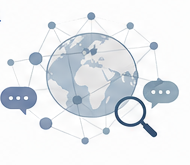
Online narratives and information environments illustration

Complex Online Narratives & Information Environments

We model consequential online discourse beyond simple binary labels, capturing stance, risk, morality, emotion, user intent, uncertainty, and information behavior across social and health domains.

Read more

Health information & misinformation

Developing multidimensional frameworks for distinguishing misinformation, risk, stance, topic, and information needs in online health environments.

Abortion information practices & barriers

Studying information seeking, sharing, barriers, emotions, and care-related narratives following Dobbs.

Stance, morality & socially aware NLP

Building richer representations of contested discourse and socially meaningful language, including skepticism, moral framing, narrative structure, and sarcasm.

Cross-Cutting NLP, Computational Social Science & Scientific Communication

Alongside the four core pillars, we develop methods that connect NLP with computational social science, human-centered evaluation, scientific communication, and domain knowledge. This work creates methodological bridges that can travel across research areas rather than being tied to a single application domain.

Read more

Narrative, morality & social meaning

Developing computational representations of narrative structure, moral framing, sarcasm, and other socially meaningful phenomena that are difficult to capture with simple labels.

NLP for science & scientific impact

Studying how language technologies can support scientific communication, impact assessment, summarization, and documentation while incorporating domain knowledge and expert judgment.

Impact Classification within and beyond Academia ↗Language Resources & Evaluation · 2026